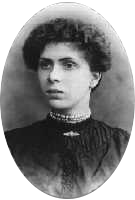
Amapola Peiró, grand-daughter of Joan Peiró
“My grandfather refused to have his confession heard by a priest before they murdered him. He was consistent in all things right to the bitter end.”
The life of the anarcho-syndicalist Joan Peiró Belis was ended by a firing squad on 24 July 1942. Another six working men, fellow CNT members also sentenced to death, perished alongside him. The one-time Industry minister of the Second Republic prepared himself to go to his death in his pyjamas on the firing range in Paterna (Valencia). “He refused to get dressed. What was the point?” his grand-daughter Amapola reflects: “Going to one’s death dressed or undressed: what did it matter?” He also refused to confess his “sins” to the priest provided by the fascists during his final hours. “At no time in my life have I ever been a believer in God. For me to make a confession would mean pulling the wool over your eyes, but it would mean me pulling the wool over my own eyes too” Peiró explained, utterly calm in the face of what was coming.
“Ethics” and “consistency”, two aspects of his personality which he retained right up until his life was taken from him, matters on which those who have remarked on the humanity of this Catalan glass-blower are agreed. “I never knew my grandfather because I was born eight years after he was shot, but my own father made it his business to ensure that his life story and his thinking were a presence in my life. From a very young age I have been active in libertarian organizations and I still am”, Amapola states. She is a 75-year old woman with a boundless love for her father, so moved by his memory that she sometimes cannot finish her sentences. It was left to Amapola to finish off a project that José Peiró, Joan’s son, started so many years ago. Born in Badalona in 1917. José had always felt very close to his father, of whom he deeply admiring. “They had a very special relationship”. José was very young when he joined the CNT and during the Civil War he volunteered to serve in the Ascaso Brigade which left for the Aragon front. When his father, Joan, took on the responsibility of Industry minister, José decided to return from the front to work alongside him as his driver. During that time he was an eye-witness to the actions of his father as a minister and to the circumstances with which he had to contend.
His steadfastness and the memory of it are set out in the book Juan Peiró, mi padre. Una vida ejemplar – published by the General Confederation of Labour (CGT) and the FSS (Salvador Seguí Foundation) – a probing analysis of the thought and actions of a man who was a key figure at various points in the history of Spanish anarcho-syndicalism.
Industry minister for the Second Spanish Republic (November 1936-May 1937)
Every time talk turns to the CNT’s entry into the Largo Caballero-led government in late 1936, the question arises: But … to what end? The CNT, an organization that by 1936 had a membership in excess of one million workers, had always been against making life easy for any government. In fact, during the years of the Second Republic (1931-1936) and prior to the army coup that unleashed the ensuing civil war, anarchists had undergone persecution, mistreatment and imprisonment and had even paid with their lives for expressing and implementing their beliefs, as in the Casas Viejas massacre in Cádiz. “My grandfather had no desire at all to join a Republican government. But he deferred to trade union discipline. The CNT was his life, as was the Mataró Glassworkers’ Cooperative.” Amapola recalls that that scheme, launched by workers who had been laid off by entrepreneurs in the sector represented, as far as her grandfather was concerned, a practical way of demonstrating that the ideas in which he believed were feasible. “The Glassworkers’ Cooperative had its own school, based on the methodology of Francisco Ferrer i Guàrdia. My own father attended that school. Men and women were paid the same wage for the work they did and there was a shared fund set aside for families of those workers who found themselves out of work due to circumstances, as was often the case, say, after they had been arrested by the police.”
The very statutes of the Mataró Glass Cooperative were based on libertarian ideas and Peiró had a lot to do with that as he thought that workers needed to be informed about and involved in decision-making. By way of an anecdote, Amapola recounts that the Cooperative carried on operating as a Cooperative right through until the 1990s. Under Francoism, it survived thanks to the high quality of the glass that it was producing. It shut down as a result of the expansion of the Philips multi-national which also manufactured light bulbs or lamps.
Being in charge of the Industry portfolio, Peiró tried to encourage the organization of work and of the workers in tune with his own thinking. Emili Cortavitarte, president of the Salvador Seguí Foundation, highlights a few points from those times. For one thing, Joan Peiró launched a process of socialization of the energy companies in existence within Spain and championed the collective approaches already up and running, which had been instigated by the working class. Then again, he had also proposed the establishment of an “industrial bank”. Cortavitarte points out that this was no “bank” like we know today: “It was a case of a bank that would collate the profits earned by those firms for subsequent sharing with others in the sector that either had no profits or were less profitable, as a means of encouraging the smooth operation of the latter. The idea was to set up a redistributive, solidarity bank.”
Not that Joan Peiró had an easy time of it, though. According to historian Dolors Marín in her book Ministros anarquistas. La CNT en el gobierno de la II República, the glassmaker was one of the most obstreperous and least compliant when it came to his dealings with colleagues within the Largo Caballero government. In particular, he clashed with the communists, for whom he had no liking at all and this is something borne out by his grand-daughter in the talk she gave at the launch for José Peiró’s book. The fact is that the glassworker outright accused the Communist Party and Catalonia’s PSUC of provoking, say, the May Events of 1937 and of relentlessly going after the POUM. Dolors Marín has this to say: “Peiró stated that the communists never wanted antifascist unity; all they wanted was to boost their own influence. He also maintained that the PSUC’s much-vaunted Catalanism was just a façade covering up for Moscow’s dictates.” In her book Marín lays it out very clearly that the anarchist ministers – Peiró for one – did all they could to ensure that the gains of the revolution were not eradicated. “But the counter-revolutionaries ensconced in the Republic did everything they could to drive the efforts of the anarcho-syndicalists into the ditch.” From the Finance Ministry (headed by the PSOE’s Juan Negrín López) every effort was made to apply the brakes to the gains made by the Industry ministry. In the words of the Catalan historian Dolors Marín, “It was a blatant fact that Peiró’s efforts as head of the Industry ministry were being directly sabotaged. Federalist collectivizations were actually of no interest to the bourgeois republicans nor to the communist advocates of statist centralization. Peiró took the onward march of the counter-revolution personally, prior to its ultimately being played out on the streets of Barcelona, prior to any reports of E. Líster’s activities in Aragon.”
The president if the FSS also sought in one of the things he said to emphasize that Peiró was one of the few ministers to step down from office, returning to his job with the Glassworkers’ Cooperative. “He also did not use his influence or the many connections he had made over his life-time to get offside or dodge the sort of certain death that eventually befell him. He stared his fate in the face, with integrity, and without any repentance.”
“Revolution for the sake of revolution”. Anarchism v. Revolutionary Syndicalism
Peiro’s open and oft-repeated rejection of violence brought him criticism from libertarian and anarcho-syndicalist circles, especially from among his comrades in the CNT. Joan Peiró was not just another militant: he had the privilege and responsibility of serving as general secretary of the CNT on two occasions, during times that were very tough for the organization. Even though he was 22 years old before he learnt to read and write – a matter of some regret to him – Peiró was the author of countless articles, manifestos and communiqués that sometimes determined the course that would be followed by the CNT. He even served as manager of a number of anarchist newspapers and was editor-in-chief of Catalunya, the CNT’s evening newspaper in Catalonia. Joan Peiró’s admiration for Salvador Seguí was common knowledge. In fact, Amapola insists that her grand-father may have come within an ace of being gunned down by the employers’ hired gunmen on the very same day on which el Noi de Sucre suffered that fate. On 10 March 1923 he had stayed around hoping to see Seguí, but his partner Mercè had dinner ready and waiting for him and he did not want to let her down. Which saved his life on that occasion, but he took the loss of Seguí very badly.
Joan Peiró was of the view that the CNT had to hang on to its trade union structures and serve as a tool for the working class rather than embarking upon a process of “anarchization” that might have suited other anarchist factions. That was his main quarrel with the Iberian Anarchist Federation (FAI), an organization launched in Valencia in July 1927, serving as an umbrella for a range of groupings in Spain and Portugal. The FAI began to make a name for itself during the years of the Second Republic and, being an anarchist organization, one of its main aims was to determine its relationship with the CNT. The internal struggle for power would be obvious, given that the CNT included lots of differing views and stances. The faístas were absolutely not moderates; the very opposite. Joan Peiró, on the other hand, found himself in the ranks of those who reckoned that “revolution for the sake of revolution” (violence for the sake of violence) was ill-timed, among other reasons because the worker had first to achieve his own emancipation and, above all, understand things and wake up to the things that were happening to him as a worker. Everything else could follow later. The debates between these factions became very heated. Peiró was to be one of the sponsors of the so-called “Manifesto of the Thirty”, in which he lobbied, as have said, for the proletariat to undergo a period of training prior to the launch of the Social Revolution. The signatories to that manifesto included Juan López, Agustín Gibanel, Ricardo Fornells, José Girona, Daniel Navarro, Jesús Rodríguez, Antonio Valladriga, Ángel Pestaña, Miguel Portoles, Joaquín Roura, Joaquín Lorente, Progreso Alfarache, Antonio Peñarroya, Camilo Piñón, Joaquín Cortés, Isidoro Gabín, Pedro Massoni, Francisco Arín, José Cristiá, Juan Dinares, Roldán Cortada, Sebastián Clara, Juan Peiró, Ramón Viñas, Federico Uleda, Pedro Cané, Mariano Prat, Espartaco Puig, Narciso Marcó and Jenaro Minguet.
Peiró was repeatedly accused of displaying “passivity” in the face of situations developing within the Spanish state and impacting on working class life. “My grand-father was a revolutionary syndicalist. He championed the notion that the CNT had to serve the interests of the working class and nothing else and it was his conviction that when the time for Social Revolution would come, the structure around which it had to build would be organizing on the basis of revolutionary syndicalism. He demonstrated more than sufficiently that he was no reformist and he had the arguments to back up his stance.” E. Cortavitate adds to that that through the years since Peiró was shot, those who slighted him thus have revised their views and even challenged them, “but the newspapers, the articles and the archives and so on are there and, as I see it, that is a good thing, a very good thing.” Joan Peiró stood up at certain points against efforts mounted by a number of groups to capture control of the CNT and actually thought that monopoly control of the organization by the supporters of “anarchization” might prove as damaging as communist control. Furthermore, as his grand-daughter explains in the book, Peiró was also to take issue with his close friend Ángel Pestaña when the latter began to talk about setting up a “syndicalist” political grouping.
The female partners of anarcho-syndicalists: Mercedes Belis
In his book, Jose Peiró makes many references to his mother, Mercedes Belis. Time and again he cites situations in which his mother proved her character by unabashedly standing up to the authorities in spite of their degrading acts and threats. It was no easy thing being the partner of an anarcho-syndicalist. To the poverty into which lots of working men and women were thrust had to be added harassment, beatings, social stigma, imprisonment and death. The women were (and are still), in each and every stage of the working-class struggle, the mainstays of the family and of the menfolk who left home each day ready never to return, all for the sake of their ideal of a better world for all human beings. Joan and Mercedes had several sons and daughters. There were times when hunger left them no time to think. They had to bury three of their children. The bourgeois authorities were so despicable that they refused to respect even the grieving of workers. Right after burying one of his sons, and at the very gates to the cemetery, Joan Peiró was arrested (one time among the many) by the Civil Guard and thrown into the Modelo prison in Barcelona for a further long stretch on account of his revolutionary trade union activities. There was no let-up.
Working-class women coped with extreme situations that those of us active these many decades later in pugnacious class organizations would find unimaginable. Every time their partners were arrested and jailed, they had to manage the family unaided. And did not hesitate, because there was no time to complain. They carried on fighting and resisting. Even so and as her grand-daughter recalls, Mercedes was very clear as to who the father of her children was. She never doubted Joan, even when they tried blackmail or blandishments to turn him into a traitor. That stance motivated those who gambled their physical well-being and very lives day in and day out on the streets in the fight against injustice, exploitation and repression. José Peiró expressed great love for and pride in his other, precisely because her strength never “failed her” and he offers a very significant acknowledgment of all the partners, sisters, daughters and girlfriends that stood up to the fall-out from the decision not to bow the knee to the authorities and the powerful.
The fascists triumphant: the exile, detention and Murder of Joan Peiró
After the civil War, Joan Peiró left for exile in Narbonne (France). There, he carried on campaigning for what he believed in, rubbing shoulders with other comrades. But his life took a dismal turn. After a short while he was to relocate to Paris to oversee the JARE (Spanish Republican Aid Council) for a few months. His mission was to rescue CNT comrades from the French concentration camps and find them somewhere where they might be safe. The bulk of them travelled on to Mexico.
When the Nazis invaded and made it as far as the capital, Joan had to set about planning his getaway again. He made up his mind to go back to Narbonne with his entourage, but was just on the verge of doing so when he was discovered. He was returned to Paris as a prisoner until, at the request of Serrano Suñer, he was handed over to the Franco regime. In Madrid he was to undergo brutal torture under interrogation and was held in the Carabanchel prison. Shortly after that, they moved him again, to Valencia this time, and he knew that the intention was to murder him. The Francoist authorities made several attempts to get him to back down, even offering him the chance to run their “vertical syndicates”. But Peiró refused each time; he was a worker and a member of the CNT and would not collaborate with a regime that was out to oppress fellow members of his class. Even his nearest and dearest could not talk him into accepting the offer and saving his life.
In his book, José Peiró recounts his father’s last hours. A further six workers perished alongside him. One of them was just barely in his twenties. He stood out on account of his strength and insistence that he carry on smiling and refusing to quake even in the knowledge that there was a death sentence hanging over him. But as he stepped out of the jail to be loaded into a black maria, he ran into his mother who had been waiting by the main gates, waiting for word of him. It was at that point that the young man broke down, greatly pained by the sight of the pain mirrored on the woman’s face: “And that youngster, who never quaked and had been undaunted even by the approach of death, could not withstand the spell cast by his mother’s tears nor the blessed lady’s mute suffering.” … “The superhuman effort that the lad made not to break down sobbing made vomit rise to his lips. The other condemned men (…) found it hard to control their emotions. Out of the blue, one of them started singing in tremulous tones: ‘of the dark storms stirring up the wind, black clouds blocking our view, even though pain and death await us, duty urges us on to face the foe.’”*
From Rojo y Negro, No 405, November 2025 https://cgt.es/wp-content/uploads/2025/11/405-ryn-noviembre.pdf
* Note: lyrics of A Las Barricadas! https://www.katesharpleylibrary.net/cc2gs7
Translated by: Paul Sharkey.
Subjects:
- Anarcho-Syndicalism
- Belis, Mercedes
- Catalonia
- Confederación Nacional del Trabajo CNT
- Federación Anarquista Ibérica FAI
- History of Anarchism
- Labour/Labor movement
- Lives (biography, autobiography)
- Peiró Belis, Juan (1887-1942)
- Peiró Olives, Amapola
- Repression
- Spain
- Spanish anarchists outside Spain
- Spanish Revolution and Spanish Civil War SCW