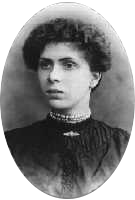
María Bruguera Pérez (1915-1992)
Maria Bruguera Pérez was born on 6 November 1915 in Jerez de los Caballeros, Badajoz, and died on 26 December 1992; her remains were cremated at the Las Almudenas cemetery in Madrid. She was 77. She was the daughter of Elisa Pérez Moreno and Antonio Bruguera; she and her brother Antonio belonged to an anarcho-syndicalist activist family, her father having been chairman of the Jerez de los Caballeros Casa del Pueblo (People’s House). María was active in the Libertarian Youth right from the launch of that organization in 1932 and also in its ‘No Dios Ni Amo’ (No God, No Master) theatre troupe. María was arrested in 1937 by Franco’s fascists who had overrun her village. Also arrested were a number of relatives – her mother Elisa Pérez Moreno and her partner Francisco Torrado Navarro, both of whom were murdered. María’s life was spared because had recently given birth to a son – Floreal – on 8 June 1937. But in December 1937, in Badajoz, she was condemned to death, a sentence subsequently commuted to a 30-year prison term and she served her time as a seamstress and embroiderer in prisons in Badajoz, Salamanca, Saturrarán, Santander and Madrid, having been forced to leave her son in the care of her in-laws. On 17 October 1937, her father had been executed by the fascists. In December 1945 María was released from prison and, with her new partner, Aureliano Lobo, she joined the underground struggle, serving on the Mujeres Libres committee alongside the Lobo sisters and Carmen Carrión, liaising with the Centre Region’s CNT Committee
Francoist Nationalist-Catholicism put paid to all that. When María had left her child in the care of her in-laws back in 1938, his name was Floreal, that being the name that María and Francisco Torrado had chosen for him. When she sought him out and showed up to reclaim him in 1946, his name had been changed to Francisco, his father having by then been murdered by the fascists on a farm near Jerez de los Caballeros.
After Franco died, María was involved in the rebuilding of feminist and women’s groups in Madrid and was active in the CNT health-workers’ union. When the CNT split, she joined the CGT. It is worth highlighting her active commitment to feminism of a libertarian persuasion. In the 1980s, having created an interest among a group of younger women in the libertarian ideal, she co-founded a collective whose mouthpiece was Mujeres Libertarias, the first issue of which appeared in Madrid in 1986. Issue No 14 of Mujeres Libertarias (1st quarter of 1993) was a monograph devoted to María Bruguera. It can be seen at http://www.memorialibertaria.org
She was the driving force behind that paper and was constantly busy, contributing ideas and seeking out resources for the production and circulation of that outstanding review. It was with that project more than any other that María can be associated without any shadow of a doubt. But there was a lot to María and a lot of tragedy around her and none of it diminished her commitment to and efforts on behalf of libertarian ideas. She is and will remain identified as one of the many who fought from within the Libertarian Movement for the much-needed emancipation and comprehensive equality of all women.
From Rojo y Negro No 409, March 2026 https://cgt.es/n-rojo-y-negro/rojo-y-negro-no-409-marzo-2026/
Translated by: Paul Sharkey.
In KSL: Bulletin of the Kate Sharpley Library No. 121, August 2026
Subjects:
- Bruguera Pérez, María (1915-1992)
- Confederación General del Trabajo (CGT)
- Confederación Nacional del Trabajo CNT
- Extremadura
- Federación Ibérica de Juventudes Libertarias FIJL
- Jerez de los Caballeros
- Lives (biography, autobiography)
- Madrid
- Mujeres Libres = Free Women
- Printing and Publishing
- Repression
- Spain
- Spanish Revolution and Spanish Civil War SCW
- Women