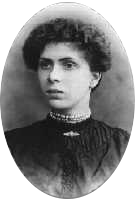
Barry Pateman: An Appreciation
It’s important to appreciate those who have come before us. I first met Barry through Albert Meltzer, probably at a bookfair. I’d learned to trust that if Albert thought well of someone, he was probably right. Barry was an impressive man, physically and mentally, with the sort of self-deprecating humour instantly recognisable to anyone brought up in a British working class environment. And he was able to talk to people, without the sort of academic language that can be so off-putting.
The times I saw him were few and far between but they were always memorable. Barry was brimming with ideas, whether about anarchist history, theory and practice, sport or wider culture. Like Albert he had a high regard for the autodidacts – especially those miner militants whose self-education far outstripped those who had had a university education. He was good company.
It was perhaps telling that I learned of Barry’s death a few days after returning from Ron Marsden’s funeral. Both had been intimately involved in the tension between organising as anarchists and remaining accessible to ordinary people. It’s a tension that runs through most of the anarchist organising and groups that I have been part of in my life, and one I kept promising Barry I would write something about – the organisations that can never get above Dunbar’s number[1] in membership without splitting, the affinity groups claiming to be membership organisations, the strategies designed for different times, the insights from Stuart Christie’s autobiography about affinity groups. Sorry, mate, life always seemed to get in the way, I am way too easily distracted….
He was generous with his time and his thoughts. He had many strings to his bow – as you would expect from someone who admired those self-educated working class militants – as was so warmly described by the guy who knew him from the New Zealand Cricket Museum at the memorial service.
Barry would regularly talk about how militant young miners from South Yorkshire were interested in the Direct Action Movement, during the height of the 1984-5 strike. But as they weren’t fully formed anarchists, DAM couldn’t accept them, despite their hard won experience of class struggle. It was this discussion that led DAM to become the Solidarity Federation (alongside other struggles like the Ardbride dispute 1986-87). Unfortunately, with a fabulous sense of timing, SF’s orientation towards labour movement militants happened at exactly the time the pool of labour movement militants shrank, following the catastrophic defeats of the 80s and early 90s. Barry saw the effects of these defeats first hand, as the mutual aid of the strike gave way to desperation and the destruction of former mining areas by a vengeful government. There were successes, most notably the Workmates group on the privatised part of the Tube, but that also swerved the same organisational question by staying independent – it wasn’t part of SF and as far as I know no one outside the originators ever joined SF. The arguments around SF’s industrial strategy, of building trust and organisation in a workplace and then tackling issues from that base are not new[2] – but the obstacles to winning over new people to an anarcho-syndicalist project through this activity remain substantial.
One of the commitments of the KSL has always been to uncover the motivations and actions of the unknown militants, who didn’t leave piles of writings for posterity. Barry was assertive that we hear the true voices of our forebears, not mediated by what we think now and what we want to bolster our own current views. We are much richer for that approach. The histories published by KSL are accessible to the general reader. The context is there. The achievements are many: Recognising the importance of Guillamon’s work on the Spanish revolution and ending the myth of the spontaneous uprising in 1936, achieved without any groundwork. And his work on the early 20th century movement and Emma Goldman stands out.
He kept looking for ways to spread the ideas of anarchism, and always in an outward-facing way. Whether through solidarity with strikers and others in struggle, through engaging with younger anarchists, or through the achievements of the Kate Sharpley Library he was always ready to share his experiences and knowledge and improve our understanding. To be an anarchist is hard, there’s a lot to live up to, and it’s important to understand the ways in which we all contribute. Barry was a standard bearer for a rigorous approach to anarchist history and we owe him a lot for that.
I remember parroting one of the myths about Emma Goldman, that somehow her militancy declined as she grew older – Barry soon corrected me – “she was militant to the end”.
And so was he.
Footnotes
1, Dunbar’s number comes from anthropologist and evolutionary biologist Robin Dunbar and is a suggested cognitive limit to the number of people with whom one can maintain stable social relationships. It’s normally taken to be about 150.
2, for example Solidarity Federation’s “Fighting for Ourselves” https://files.libcom.org/files/Fighting%20For%20Ourselves.pdf Or Albert Meltzer writing about the idea of “Fives” as groups of militants in the same industry https://files.libcom.org/files/bf2-7.pdf p.20