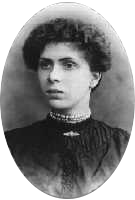
Remembering Bartolomé Flores Cano and Pedro Cano Garrido
BARTOLOMÉ FLORES CANO
Bartolomé Flores Cano (1907-1990) was born in Mojácar, Almería, in Andalusia (Spain) on 4 April 1907 and died on 10 February 1990. His mother was Melchora Cano, born in Mojácar on 30 June 1884: she passed away due to dysentery and lack of care in July 1941 at the age of 58, in the Rivesaltes concentration camp. His father was Bartolomé Flores López, a socialist activist and deputy mayor of Mojácar: he died in 1948 as a result of torture suffered in Franco’s cells.
Bartolomé Flores Cano started work at the age of 12 in the mines, quarries and building sites linked to the railways in Brittany, Paris and Marseilles in France. He returned to Spain following the proclamation of the Second Republic.
Bartolomé lived in Olesat de Montserrat near Barcelona in Catalonia, which is where he was married on 12 December 1931. From 1932 to 1935 he worked as a miner in Fígols and Asturias; at that point the death of a miner in a gas explosion prompted Mojácar-born Pedro Cano and Mojácar-born Pedro Guerra to mobilize their colleagues, which sparked a strike that lasted two weeks and in the course of which Bartolomé would meet up with Buenaventura Durruti. From 1935 on he lived in Manresa and worked as a miner in the pits in Sallent, alongside Pedro Guerra, an anarchist miner who introduced him into the freemasons in 1935.
In 1935 it was from his Manresa home that Federica Montseny and Durruti left for the Vilomara bridge in Bages in Catalonia. He met Emma Goldman on the Aragon front.
During the civil war Bartolomé served as a militian with the ‘Tierra y Libertad’ Column on the Aragon front together with his cousin Pedro Cano and Pedro Guerra and it was thanks to Juan García Oliver that they escaped the summary executions being carried out by the Stalinists.
Bartolomé also helped the maquis.
Pedro Cano was murdered in the cells in Olesat de Montserrat in 1939.
On 22 January 1939, during the last of the fighting on the Segre front, Bartolomé Flores Cano, serving in the XI Infantry Battalion (‘Tierra y Libertad’ Column), was wounded in Sanhuaja (Lerida) by a shell. He was hospitalized in Berga, Barcelona and later in Olot and Gerona and finally in Camprodón (Ripollés, Gerona). Pedro Guerra evacuated him during the Retirada [Withdrawal] and he was admitted to the hospital in Montpellier. That April, he had his left arm amputated in Marseilles.
Later he would interned in the Barcarés, Argelès-sur-Mer and later the Rivesaltes concentration camps. In June 1941 he was drafted into a foreign labour company to work on a tunnel through the Croix Rousse hill in Lyon. Thanks to a comrade – Andrés Alonso Gómez – he was able to leave the camp. In order to get out of the camp, Andrés Alonso Gómez stood in for Bartolomé who at the time was down to 37½ kilos and stood 1.78 metres tall, so we can take it as read that Andrés saved Bartolomé’s life.
Bartolomé and his wife Juana Maria Alonso Torres (born in Mojácar on 12 October 1913) then moved to Vaise where they lived at 34 Avenue Joannes Masset (Lyon 9) in the Auvergne.
There he set up a sort of a “court of miracles” offering daily help to dozens of refugees, offering them food and a place to sleep.
However, under the German Occupation, Bartolomé spotted that one landlord, after renting his apartments to Jews, was denouncing them to the Gestapo. He managed to prevent the execution of 3 Jewish families by hiding them in the Croix Rousse tunnel in Lyon, securing them safe conduct passes and handing them over to the Resistance.
Together with Andrés Alonso Gómez he was also in the resistance in the Croix Rousse and Vaise district. Antonio Flores was also a member of the underground resistance alongside Bartolomé.
In particular he pilfered dynamite from his workplace for the Resistance and was able to hide members of the resistance in his home for several nights; his home was searched on three occasions by the German police but nothing was found. Bartolomé on one occasion harboured the Resistance chief Jean Moulin in his own home for two days. When air raids hit the railway station and a factory in Vaise, he helped the resistance organize the defence of Lyon.
In addition, in cahoots with comrades from Toulouse, he carried out liaison missions and in September 1944 took part in the fighting to liberate Lyon. When Leclerc’s men arrived in the Place Valmy in Vaise, Bartolomé welcomed a dozen of them into his home at the “court of miracles”. He ended up being awarded an 82% war disablement pension at the Emile Morin factory in Vaise.
After the Second World War, Bartolomé remained active in the Lyon Local CNT Federation where he championed classical anarchism and he used to spend a week of his holidays on the Aymare farm in the Lot department helping out his fellow disabled. Every time he went to Aymare his friend José Peirats would join him there.
One of Bartolomé’s friends, a violin teacher by the name of Iglesias from the Villeurbanne CNT used to lay on recitals in the mining district on the Avenue Joannes Masset in Lyon for the miners and their family members.
Iglesias returned to Spain, only to be denounced from Lyon and he died under torture in Franco’s jails.
Bartolomé met up with Juan García Oliver again in France. Bartolomé, whom Federica Montseny was fond of describing as “my Lyon guy” died on 10 February 1990 in Sant Boi de Llobregat near Barcelona.
PEDRO CANO GARRIDO
Born in Mojácar (Almería) on 6 October 1912 – died 14 March 1943 in the Modelo Prison in Barcelona. Underground miner and textile worker.
His father was José Cano Montoya who died on 27 November 1939 and his mother Antonia Garrido Balastegui who was born in Mojácar and lived at 21 Calle de las Alturas (els Basalets) in Olesat de Montserrat.
From 1923 to 1936 Pedro Cano worked as an underground miner and in the textile plants. From what he told the Francoist court he was hauled in front of, he worked for the Olesana S.A. factory also known as “El Molí”. This was a manufacturing firm in Olesa, owned by the Barcelona Vilá famlily.
From Borrás in 1925 he sent a donation for the prisoners to La Revista Blanca. Pedro lived in Olesat de Montserrat at 28 Calle Sant Antonio in the same building as his cousin Bartolomé Flores Cano and his wife Jeanne Maria Alonso Torres, the building where the oldest son of Bartolomé Flores Cano was born on 29 September 1932.
Pedro Cano Garrido was a member of a FAI action group that was active during the telephone strike in the summer of 1931 and which carried out acts of sabotage. That same action group spearheaded the abortive revolt in Fígols in January 1932. He also worked in the mines in Fígols. In 1935 he was working in the mines in Sallent with his cousin Bartolomé Flores Cano and Pedro Guerra … During the civil war he served in the ‘Tierra y Libertad’ Column in Aragon and Madrid … That column, which left for the Madrid front on 7 September 1936 was made up of a hundred volunteers from Olesa de Montserrat, Monistrol, Terrassa, etc.
When the anarchists lost the war in 1939, Pedro Cano was turned in by a neighbour from Olesat de Montserrat and arrested … He was placed in the Modelo prison in Barcelona where he faced several convictions. A photograph that had appeared in an anarchist newspaper was used to convict him: he was identified in the caption as the person wearing the priest’s hat.
That photo encapsulated the charges brought against him. He was subjected to the same summary proceedings.
He was accused of having had a hand in the detention of local people who were subsequently murdered, of involvement in various revolutionary acts, of having volunteered to serve in the front lines, or involvement in looting and other violent actions at a number of religious premises, or having taken part in the ransacking and looting of the homes of industrialists and important people with right-wing connections and of demanding the curate’s hat he was shown wearing in that photograph.
The photo was in his archives. It was the only photo there.
In short, he was charged with being an anarchist and a FAI member and of having served in the control patrols in his home town and of involvement in the violence unleashed in the rearguard.
In his plea, Pedro Cano explained that he had been a militian with the ‘Tierra y Libertad’ Column.
He was charged with backing the rebellion with no extenuating circumstances and was sentenced to death.
Pedro Cano Garrido was scheduled for trial at the town hall in Olesat de Montserrat some time between 28 and 30 December 1942. The prosecuting counsel could call upon reports drafted by the council itself and by the FET y de las JONS (Falangist) intelligence agencies. Pedro Cano was unable to leave the prison for the town hall to stand trial as he was sick in prison at the time. Before he died he had requested time and again that he be released on licence, intending to seek treatment for his TB in a specialist clinic. His applications were repeatedly refused. The prison doctor confirmed that Pedro was suffering from TB. Given his health as a result of that condition he was unable to stand in the dock at the trial in Olesat de Montserrat.
One way or another, this was a death sentence.
He died of TB in the Modelo prison and also of the beatings meted out to him, after spitting up fragments of his lungs.
In a book about the Francoist prisons in the Lower Llobregat area (1939-1960) I discovered that Pedro Cano Garrido’s sister, Micaela Cano Garrido, aged 18, was also jailed in Franco’s Modelo Prison in Barcelona the same year as her brother. The only record we have is the date of her admission. What the charges against her were and how long she served there and, above all, if she made it out again, we do not know.
Source: https://www.solidaridadobrera.org/ateneo_nacho/paginasagora/paginasarticulos/bartolome_flores_y_pedro_cano.html
Based on information supplied by Corinne Flores in her blog at [https://web.archive.org/web/20230526154301/http://corinneflores.blogspot.com/]
[Photo: Pedro Cano Garrido in the hat]
Translated by: Paul Sharkey.
Subjects:
- Cano Garrido, Pedro (1912-1943)
- Catalonia
- Confederación Nacional del Trabajo CNT
- Federación Anarquista Ibérica FAI
- Flores Cano, Bartolomé (1907-1990)
- France
- French resistance
- History of Anarchism
- Lives (biography, autobiography)
- Mining industry
- Repression
- Solidarity
- Spain
- Spanish anarchists outside Spain
- Spanish Revolution and Spanish Civil War SCW
Similar items
- Buenacasa, Manuel, Salvador Cano Carrillo and Valeriano Orobón Fernández. Valeriano Orobón Fernández: Towards the Barricades.
- Imanol, -. Some of the Libertarian Guerrilla Bands Operating in the Cádiz-To-Málaga Area.
- Téllez Solà, Antonio. History of a Guerilla Band: The three Jubiles brothers.
- Imanol, -. Operation Frankton and the Role of Spanish Libertarians.
- Aisa, Ferran. Solidaridad Obrera, Clandestinity and Transition, 1939-1987.