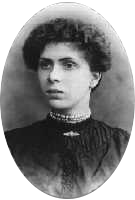
Cipriano Mera on Mika Etchebehere
“ … two POUM companies under the command of ‘Mica’ Etchebehere, whose partner has by then perished on the front. This brave and capable woman, maybe somewhat unduly motherly in her dealings with the militians under her orders – only natural – had already displayed huge sangfroid and resolve: finding herself and some comrades surrounded in Sigüenza, she had successfully extricated them and given the enemy the slip.” (pp. 101-102)
“The communists arrest comrade Mica
In mid-May [1937], when I happened to be in the 14th Division’s forward command post at the Kilometre 29 mark on the Brihuega to Masegosa road north of the Tajuña river, a courier brought me a note from Major Perea, commander of the 5th Division, reporting the arrest of Captain Mica Etchebehere and urging me to see to it personally that she be set free. Seemingly, she was being held in the cells at the General Directorate of Security [DGS].
I sought leave from the head of the IV Army Corps to absent myself from the front. When that was granted, I headed for Madrid to handle the matter. Shortly before noon I reported to the General Directorate of Security and, without making me wait, I received a very amiable welcome from the Director, Manuel Muñoz. I asked him bluntly:
- Is it true that you have Mica Etchebehere, an Argentinean of French origin, I believe, and a captain in our Army, in custody here?
- Well, yes, Mera: I remember the name well, she being a foreigner.
- Right: I can tell you that I have left my Division with the permission of the commander of the IV Army Corps, to secure the release of that antifascist. I can vouch for her as being someone deserving of complete trust and I take responsibility for her.
- There is not point in my hiding it from you that she was brought her due to ‘disaffection’ for the Republic.
- Not a bit of it, Señor Muñoz. Let me tell you that her accusers are not going to be able to level such an accusation in my presence, as it is utterly false. She has proved her antifascism. She fought in Sigüenza in the early days and there she found herself and some militians surrounded in the cathedral. In the end she was able to escape with some others, after her own partner had died in action alongside a few dozen other fighters. Months after that, by then a company commander, she fought in the defence of Madrid, specifically in Humera, where the bulk of our troops were chewed up by artillery. At the head of her men, Mica always fought with huge commitment and integrity. There you have a quick summary of the record of this person, allegedly disaffected from the Republic, Señor Muñoz. What has no doubt happened here is that Communist Party agents have tried to get rid of this woman on account of her being from the POUM. I say again that I will vouch for this one hundred per cent antifascist who left her homeland with her partner to come to Spain to defend our cause.
- In light of the details you have provided to me, Mera, you can leave with your mind at ease, for you have my personal guarantee that nothing is going to befall this woman and that she will shortly be released. In the event of any problem, and I do not see one, I will call you to come and see me and I will hand Mica over to you personally.
We parted on very friendly terms. The following day, to my huge satisfaction, Mica reported to my command post, thanks to having been supplied with a light car by comrade Eduardo Val. She spent a few days with us before joining the Mujeres Libres organization. That was the last I saw of her.” (pp. 133-134)
Mera inserted these footnotes:
1. As we know, the events that occurred just days earlier in Catalonia, in Barcelona particularly, were exploited by their promoters, Stalin’s disciples, to mount across the republican zone a savage crackdown on revolutionary workers, who were indiscriminately accused of being Trotskyist provocateurs. Mica was one of their victims, as we all might have become, had not the most outstanding CNT militants reacted immediately and vigorously.
2. I had the pleasure of meeting up with Mica again in Paris in 1948. At that time, we revisited the incident that could have had such serious consequences for her.
(Notes on p. 134)
Cipriano Mera Guerra, Exilio y Cárcel de un anarcosindicalista (Paris, Ruedo Ibérico, 1976)
Translated by: Paul Sharkey.
Subjects:
- Communist Party CP
- Confederación Nacional del Trabajo CNT
- Etchebéhère, Mika (1902-1992)
- Mera, Cipriano (1897-1975)
- Partido Obrero de Unificación Marxista POUM
- Repression
- Solidarity
- Spain
- Spanish Revolution and Spanish Civil War SCW
- Women
Similar items
- Tarcus, Horacio. Mika Etchebéhère.
- Some Sources on the Spanish Revolution of 1936.
- Téllez Solà, Antonio. On the Guerrilla War on Francoism in Cordoba. Norberto Castillejo Jiménez aka Veneno.
- Etchebéhère, Mika. Hippolyte Etchebehere aka Juan Rustico.
- Jiménez Cubero, José Antonio. Carmelo Romero Ortega AKA Pepe AKA Pinche.