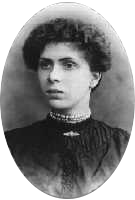
I’m going to make the revolution in the sky [Clara Thalmann obituary]
Aged 78, Clara Thalmann, the Swiss social revolutionary woman, died on the 27th January, 1987, after a long and difficult illness at her ‘La Serena’ home in the northern outskirts of Nice, in the south of France. Clara Thalmann was born in 1910 at Basel, Switzerland. She was one of ten children of a working class family. Her father was a German who had emigrated to Switzerland because he was a socialist and therefore an internationalist minded war resistor. To emigrate was the only way to avoid the draft for the German/French war of 1870/71. Clara thus grew up in an open-minded and committed socialist working class atmosphere.
COMMUNIST
The betrayal of social democracy, its pro-war and collaborationist attitude to the imperialist powers of World War 1 and most importantly the triumph of the great October revolution in Russia in 1917 were the decisive reasons which later made her feel strongly attracted to communism. In the twenties when she was a young working woman in Paris she joined the Communist Party and worked at the French communist paper Humanité.
STALINISM
Soon after Lenin’s death in 1924, however, faction struggles inside the communist movement started. The new party leader, Stalin, systematically strengthened the bureaucratic apparatus at the expense of the few revolutionary traits which were still there. Along with Stalin’s campaign against the old Bolsheviks of the October revolution, it also affected the French communist party. It meant that committed activists, like Clara, could no longer choose where and how they wanted to carry out their political work but that they had to follow decisions given from the party secretaries and functionaries at the top.
A vivacious and passionate character like Clara’s couldn’t stand it, and fed up and disappointed she went back to Switzerland in 1928. There she at once joined the Swiss communist party, but now in order to make inner party propaganda for opposition to Stalin’s policy.
At the time Clara became active in the communist opposition she met a young worker from her hometown Basel, who had just returned from Moscow where he had spent 4 years as a student at the Workers University. He too turned out to be very disappointed because of the stalinist development in the Soviet Union, and had returned from Moscow as a convinced supporter of the communist opposition. On the day both returned, they met, and began what became a life-long relationship.
SPAIN
Because of their activities for the opposition they were soon expelled from party and they continued their anti-stalinist marxist propaganda from outside the party. They cooperated with left wing communists from Germany as well as with Trotskyites.
In 1936 the German nazi-fascists arranged their big propaganda show of the Olympic Games in Berlin. In order to counter and unmask that farce the international revolutionary movement organised the Workers Olympic Games at Barcelona in Spain. Clara Thalmann hitch-hiked down south to take part in the games as a swimmer and Swiss working woman delegate.
But the International Workers Olympic Games never actually took place. On the 17/7/36 the Spanish militarists carried out a coup d’etat against the Spanish Republic. It was the start of the civil war of ’36-’39.
SOCIAL REVOLUTION
When Clara arrived at the Spanish border the anti-fascists had already beaten the militarist conspirators in the main parts of the country. She witnessed the enormous social revolution which took place at the same time, from its beginnings. The Spanish anarchist movement, the biggest working class organisation in Spain at that time, at once confiscated large land properties and disowned factories, and changed them into collectives run by the working wo/men themselves. Soon almost two thirds of the republican land and industry was collectivised and under the control of the anarchists of the CNT and the FAI. In Catalonia, the stronghold of the social revolution, and particularly in Barcelona, the heart of the revolution, the state became only just a facade. The real power was in the hands of the anarchist revolutionaries. Revolutionary committees and militias controlled politics and the economy as well as the struggle at the anti-fascist frontline.
Clara, who felt very enthusiastic at all these developments, at once joined the anarchist militias of the famous Durruti Columns to fight as a militia woman at the Aragon front. Pavel Thalmann also came down to fight for the revolution and joined her.
COUNTER-REVOLUTION
But the signs weren’t hopeful for the revolution. Clara and Pavel were among the first to warn of anti-revolutionary developments inside the republican camp. Because of their previous experiences with stalinist politics, they realized the dangers for the social revolution in Spain, mainly embodied by the stalinist Communist Party of Spain, PCE. Together with liberal-bourgeois parties – like the Republican Left, IR; the Left Republican Party of Catalonia, ERC; and the middle class tenant farmers’ union UDR – the PCE was the main enemy of the social revolution, the main force for the defence of private property and for the continuity of the legal system of the bourgeois-parliamentarian republic inside the republican camp.
During the ‘short summer of anarchy’, at a time when the social revolution was overwhelmingly successful and powerful, from July ’36 to autumn ’36, the Spanish communists did not dare to attack the revolution openly. At that time they were much too small, only a few thousand party members compared to several millions of revolutionary working wo/men who were mainly organised in the CNT, the left-socialist trade union UGT, and the dissident left communist party POUM.
MILITIAS VERSUS MILITARIZATION
When the Spanish stalinists gained further influence after the Soviet Union had started to deliver arms to the republican side which had an enormous propaganda effect, pressure on the revolutionaries became more intense. At first the revolutionary institution of the militias was the target. The PCE demanded to dissolve the militias and to reintroduce a conventional hierarchic ‘People’s Army’, which also meant the reintroduction of rank and grades and the hated military obedience, all of which had been abolished by the rank and file structured organisation of the militias. The so-called ‘militarization of the militias’ was something else Clara and Pavel opposed strongly. But again it was in vain. The anarchists finally agreed to the militarization because they naively hoped that they would be able to get access to the badly needed arms deliveries of the Soviet Union. The militarization debate caused bitter and passionate discussions among the revolutionaries. ‘You should never give in to any compromise!’ Clara kept on saying.
ARRESTS
Because of their pro-revolutionary participation in the ‘May Days’ and also because they had quite a few POUM friends (the POUM, which was most furiously attacked by the communists and slandered as ‘counter-revolutionary Trotskyists’, was almost physically exterminated after the ‘May Events’), Clara and Pavel had to go underground to escape the persecution of the newly formed secret police organisation of the PCE, the SIM. But when they decided to leave Spain because they felt their lives in danger of stalinist persecution and were about to climb a ship in the harbour of Barcelona some time later, they were recognized by communist plain clothes detectives, arrested, and moved to various private prisons of the SIM.
They spent several months in the jails of the stalinists. Fortunately they had told friends before their arrest; ‘If you do not hear from us within a certain time it means we have got arrested’. Therefore friends in Switzerland launched a campaign to get them out and finally after the intervention of a leading member of the Spanish Socialist Party they were released. Immediately they left Spain and went to Paris.
PARIS UNDER THE NAZIS
During the Nazi occupation of France in World War 2, Clara and Pavel built up a small independent revolutionary resistance group in Paris. Their home soon became a hide-out for Jewish and revolutionary refugees who tried to escape the nazis. They were never caught and they were able to help many people.
LA SERENA
After the liberation from German fascism, and several years in the big city, Clara and Pavel were fed up with Paris. They settled down in the south of France in the northern outskirts of Nice and founded a land commune which they called ‘La Serena’. That was in 1954. The ‘Serena’ soon developed into a meeting place for revolutionaries from all over the world. Pavel died there in 1981, and in 1984, 30 years after its foundation, I went down to visit Clara together with a friend of mine.
DISCUSSIONS
We not only got to know the popular revolutionary Clara Thalmann, but we were also brought closer to her ordinary everyday life. Her open-minded and vivacious manner conquered our hearts. It was particularly great when we spent a second week together at the international anarchist meeting in Venice at the end of Sept. ’84. We had long and interesting discussions on lots of subjects – rank and file/self-mangement structures of the anti-nuclear movement, social and political changes of the working class/role of the proletariat according to the neo-conservative capitalist offensives (‘Bloody Maggie’, ‘Pear Head’ Kohl, ‘Mickey Mouse’ Reagan, …), imperialist oppression in the north of Ireland, the case of Marie and Noel Murray, international imperialism in the so-called Third World, increasing dangers of neo-fascism in W.Germany, racism in France, the guerilla organisations Red Army Faction and Action Directe, the miners strike in Britain, etc. Clara took a deep interest in everything. As far as the urban guerilla struggles in western Europe are concerned she frankly said that she regarded them quite sceptically. She always maintained that a guerilla has to act in connection with social revolutionary mass movements – militarily and politically. For her a guerilla war only had sense if a revolutionary mass movement existed. Otherwise she thought the guerillas might be in danger of developing a policy which is difficult to understand for the people, and likely to become authoritarian and elitist.
VIOLENCE
On the other hand, she saw the necessity of determined direct actions taking place – even if ‘only carried out by small groups’. Namely, if those direct actions are the actual expression of how the people feel and think. For this reason she regarded the so-called ‘violence debate’ which plays an unfortunate role in many of today’s mass movements like the anti-nuclear movement or the peace movement, as detrimental. Because such a ‘debate’ would only lead to a split in the movement from which only the ruling class can gain something (divide and rule)
Clara’s main hope for the future social and political changes was the youth. Their increasing contempt of official policy and their spontaneous readiness to get up and revolt, was a main source of her political optimism. She never lost her faith in the revolution.
When we asked her whether she would call herself an anarchist today or not – because she had been a marxist in earlier times – she simply answered, ‘Yes’. And added, ‘Still we are a minority. But soon enough we will carry the flying red and black banners of anarchism ahead of us. Then we will actually see who of all these people will turn up’. And laughed.
She won’t be forgotten - ‘Salud companera!’.
Black Star Press, W. Germany, sent us this obituary, which we are pleased to print as a supplement to Ainriail.
Clara and Paul Thalmann ‘Revolution for Freedom; Stages of a Political Fight’ (French and German editions).
From Ainriail : A Belfast Anarchist Bi-Monthly, no.7, March/April 1987.
[A different version of this article was published in Catalyst No.1 Winter 1987 https://libcom.org/article/thalmann-clara-1910-1987. It seems likely that both versions come from the (German-language) obituary by Erich Rathfelder and Thomas Pampuch in the newspaper TAZ (mentioned in Schwarzer Faden, no.24, but not seen).]