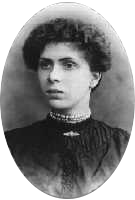
FRYDMAN, Zalmen (Zelman) Khaimovich (Khaim-Yankelev, Moshka Khaimov)
(revolutionary pseudonyms: “Syoma”, “Syomka”; aka: Frydman Semyon, Frydman Sam)
06.10.1891, Zaręby-Kościelne, Ostrovsky uyezd, Lomzhinskaya gubernia – November, 1942, Auschwitz, Upper Silesia, Germany.
Jewish. Elementary education. In youth he emigrated to the USA where he lived in Chicago and worked as a tailor. Anarcho-syndicalist, member of the Union of Russian Workers in Chicago.
An active participant in the anarchist and labour movements in Chicago. Vegetarian. Mentioned in 1915 as a contributor to the fund to support a weekly workers’ newspaper. The organ of the Federation of Unions of Russian Workers of the United States and Canada was the newspaper Golos Truda (The Voice of Labour), published in New York from 01.03.1911 to 25.05.1917.
Returned to Russia in 1917. Lived in Odessa and worked as a tailor. A member of the Odessa Federation of Anarchists (OFA).
During the regime of Hetman P. P. Skoropadsky (1918) and during the occupation of Odessa by Denikin’s forces (December 1918 – April 1919), he participated in the anarchist underground. He was a member of the Confederation of Anarchist Organizations of Ukraine “Nabat” from late 1918.
After the capture of Odessa by the Red Army (April 5-6, 1919), he briefly participated in the legalized “Nabat,” then, according to B. V. Yelensky, joined the Makhnovist movement. In the spring and early summer of 1919, he fought against the Whites as part of the 3rd Zadneprovskaya Brigade, then the 1st Ukrainian Insurgent Division of N. I. Makhno.
He apparently left the Makhnovist movement in June 1919, when the Soviet government severed its military-political alliance with the Makhnovshchina. By the fall of 1919, he was living in Moscow.
He was arrested in Moscow in the fall of 1919 on suspicion of belonging to the organization “Anarchists of the Underground.” According to Yelensky’s memoirs: “As a strict vegetarian, in prison he demanded a diet of fruit and vegetables. He was persistent in this demand, remaining quite indifferent to the fact that he was imprisoned by the dreaded All-Russian Cheka, whose name in those days inspired a sense of terror everywhere. One day all the imprisoned anarchists were led out of their cells and lined up in a large hall. Soon the door opened, and in walked the terror of the All-Russian Cheka – Dzerzhinsky – with his entire entourage. Heedless of the danger, which was somewhat reckless, Syomka went straight to this terrifying figure and demanded that, as a vegetarian, he be fed vegetarian food.”
In early 1921, he was living in Moscow. He attended the funeral of P.A. Kropotkin on February 13, 1921.
In late February 1921, he returned to Odessa. He took part in “Nabat” until its final liquidation by the Chekists in late 1921. During this time, he married Deborah Khenikhovna Yankel.
In November 1922, he was living in Odessa, working as a baker. Local Chekists described him as an anarcho-syndicalist, a “worker,” “popular,” and an “active” party member. [That is, active in the anarchist ‘party’. KSL]
In 1923 he and his wife went abroad. In June 1923, the Frydmans were in Constantinople, where they were met by Yelensky. Later they left for Paris. Zalmen was a member of the Paris Group of Jewish Anarchists. He participated in the work of the International Workingmen’s Association’s Aid Fund for Imprisoned and Exiled Anarchists and Anarcho-Syndicalists in Russia. In 1935, the Frydmans had a daughter, Michelle.
By the end of 1939, he was unemployed, about which he wrote to Yelensky in a letter dated September 21, 1939: “We have been without work for a long time now. I will probably have to leave in the near future. Dora and Michelle will be left without any means of support, since their funds have been depleted for some time. Michelle is four years old. She is very weak and attached to her mother. Therefore, at the moment there is no possibility of leaving her somewhere so that Dora could go to work; the child must remain with her. And it is not yet certain whether they will be allowed to live in Paris. For this reason, I am forced to turn to you with a request. Before, I have never asked for any help for myself – for others, yes; and I understand your economic situation perfectly. Nevertheless, if you can do something for the family, I ask you, do not let Dora and the child end up in poverty. (…) This letter is written by me not on behalf of the movement, but only on my own behalf. Other comrades will probably tell about themselves.”
He was arrested by the Nazis in Paris in the summer of 1942 along with his wife. He was held in the Drancy transit camp outside Paris. On August 24, 1942, the Frydmans were deported on Transport No. 23 to the Auschwitz concentration camp. According to Yelensky, “As the train departed, a note was thrown from the train carriage asking that a letter to be sent to our address. It eventually reached us, and its content was brief and heartbreaking: ‘They are taking us away; we don’t know where. Take care of our child.’ This was the last we heard from Semka and Dora.”
He was murdered by the Nazis at Auschwitz in September 1943.
After the end of World War II, the Frydman’s daughter, Michelle, received financial assistance from the Alexander Berkman Relief Fund and other anarchist organizations.
References available on request.
Translated by: Malcolm Archibald.
Subjects:
- Bolshevik repression of anarchists after 1917
- Chicago
- France
- Frydman, Dora
- Frydman, Sam (1891-1942)
- History of Anarchism
- Holocaust
- Lives (biography, autobiography)
- Makhnovist movement
- Odessa
- Paris
- Relief Fund of the International Working Men's Association (IWMA) for Anarchists and Anarcho-Syndicalists Imprisoned or Exiled in Russia
- Russia / Russian Empire / Soviet Union
- Russian anarchists outside Russia
- Russian Revolution and Russian Civil War
- Ukraine
- Union of Russian Workers of the USA and Canada (URW)
- United States of America USA