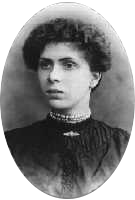
Hippolyte Etchebehere aka Juan Rustico
Hippolyte [this being the French form of his Spanish name, Hipolito] Etchebehere was 36 years old when killed in action in Atienza (near Guadalajara) on 16 August 1936, right at the start of the Spanish Civil War. He had been edging forwards, followed by a team that he had brought with him, hurling grenades in an attempt to get closer to the stronghold that had to be taken at all costs when a machine-gun bullet stopped his heart.
Of his 36 years as of the day of his death in Atienza, Hippolyte Etchebehere had spent 17 wholly committed to the revolutionary struggle for which he had opted one January 1919 day after he watched from the balcony of his home as mounted police dragged along some white-bearded Jews tied to their saddles, Jews trailed out of the Buenos Aires ghetto.
In Argentina in those days the Jews were referred to as “Russians”. Being a Russian meant being a Bolshevik, a revolutionary, behind the struggle being waged at that time by the workers of one of the country’s biggest factories in a strike the scale and steadfastness of which made the bourgeoisie quake.
During the “Tragic Week” that January, which has gone down in the history of Argentinean repression as a bloody milestone, Hippolyte Etchebehere turned to revolution the way others turn to religion, forever, right to his very last heartbeat, imbued with a clear-sighted, reasoned, ever watchful hatred that grew sharper with every passing minute, as taut as a longbow ready to launch its arrows against that nonsensical, murderous grasping social order.
His first venture into activism was as an anarchist. In the days following “Tragic Week”, he frantically wrote a pamphlet entitled Listen to the Truth and he roved the city streets handing it out to police personnel. Within hours he was in prison, charged with offences against the security of the state.
Because he came from a respected family and also because he was a university student, he was not dispatched to the sinister Ushuaia penitentiary in the far south of Argentina.
On his release, he left the family home lest his presence make problems for his loved ones and, together with a bunch of students, he organized the Insurrexit student group, a tiny revolutionary faction that was so zealous and combative that, in its two years in existence it left its mark on a whole generation, not just in Argentina but across the whole of South America.
Marxism and the Russian Revolution brought him into the ranks of the Communist Party where he soon came to prominence due to the breadth of his learning and his gifts as a political orator, so much so that the Central Committee did everything it could to bring him on board.
When the fight against Trotsky erupted within the Communist Party of the Soviet Union, Etchebehere, an ardent admirer of the leader of the Red Army, took his side. And such was his revolutionary profile and his activist record’s integrity that when he was booted out of the party in 1925, the Central Committee did not dare try to blacken his name, as was common practice back then, with any accusations about his being an “agent provocateur in the hire of the police” or other such misrepresentations, but just censured him for his Trotskyism, his factional activities and his anti-bolshevism.
His fragile health – with TB menacing him – was severely tested by years of privation and disproportionate activity and a period of rest was called for; he availed of it to further his Marxist and military studies. In his note-books I came across a series of drawings relative to the raising of guerrillas, a description of an aircraft machine-gun and a scheme for accelerated officer training …
The years after that were our Patagonian years and the sorest temptation of our lives, a hare-brained notion of settling down on solid ground, battered by the wind off the Atlantic coast and sweetened by the landscape of the pre-Cordillera and Cordillera of the Andes. The area was still a land of adventure holding out the prospect of an easy fortune after three or four years of work, and material well-being, free of the restrictions of city life and rubbing shoulders with people who looked like they had stepped out of a Jack London novel.
We were, as I say, very sorely tempted, but the vows we had made in our youth held us back. And with the money earned during a period of frantic work, off we went to Europe in search of what we saw as the struggle that looked to be closer at hand there, what with their robust workers’ organizations…
We arrived in Spain two months after the proclamation of the Republic. On the streets of Madrid we walked in the stormy demonstrations demanding separation of Church and Stare, noting, day after day, that the republican Assault Guards were already adept in the use of their batons, with the same violence as the old Civil Guard. After three months we moved on to Paris.
Settling into some cramped lodgings in the Rue Claude Bernard and with no material worries, we used to spend most of our days at the Sainte Genevieve library, poring over what we reckoned were the works essential for our education as revolutionary activists. We found our first French comrades in the “Amis du Monde” group.
In October 1932, confident that in Germany we would find fertile ground for the crucial battle, we arrived in Berlin. In an effort to improve our command of the language and strike up links with the German workers, we enrolled at the Marxist School of the German Communist Party, which was also a bona fide school offering classes for adults and it was there that we learnt to assess the stultifying, noxious policy of the Communist International, as faithfully implemented by the leaders of the German CP.
There was no revolutionary struggle in Germany. In two articles that were published in the review Masses by René Lefeuvre in Paris […] Rustico (Hippolyte) recounted the events that we had lived through during the days leading up to Hitler’s arrival in power.
On returning to Paris, we remained expectant but we were not idle. Together with comrade Kurt Landau, the splendid Austrian militant murdered in 1937 by the stalinists in Barcelona, we had embarked upon the slow business of re-establishing contacts with the Communist Opposition group known as the “Wedding” group, the group of which Landau had been the leader in Berlin.
When the miners’ revolt erupted in Asturias in Spain [in October 1934], we sorted out our passports, intending to go there. The bloody crackdown on that exemplary revolt which was so reminiscent of the Paris Commune in terms of its motives and the course it took, burst our balloon. Rustico penned magnificent pages about the Asturian struggle, but unfortunately those went missing in Barcelona when the Stalinists looted the POUM offices during the vents of May 1937.
Co-founder with comrade Landau and a number of French and foreign activists from the Que Faire review [they included André Ferrat, Kagan and Victor Fay], Etchebehere was still, in spite of his serious health issues, living only for his calling as a revolutionary.
When medical tests revealed that he had tubercular lesions on both lungs, he was obliged to consent to a stay in a sanatorium, that being the only effective treatment back then; at the same time, it offered him some respite from his efforts. Over his six months’ stay in the sanatorium, he set about updating his literary education, reading all of Flaubert and Stendhal and the French and Spanish classics, anything that came out on the subject of Nazism and filling his exercise books with notes on his reading.
When discharged from the sanatorium, with his health improved, he was advised by his doctors to seek a change of climate. He settled upon Madrid, not just because of the sunshine and dry air, but also on account of the labour struggles that were growing across Spain on a daily basis. He arrived there in the month of May 1936. I was due to join him there two months later, on 12 July to be precise, firmly determined to pursue our dream holiday of a ramble through Asturias.
We had not finished bringing each other up to date about our times apart when the fascist generals’ revolt erupted like a thunderbolt that wiped out the past and ignited fresh hopes.
We spent the whole afternoon on 18 July roaming around in search of weapons and commitments, trekking from one UGT union to some other CNT union, surrounded by young people barely more than children and men already elderly, our heads spinning with rumours and speeches, songs and slogans, swallowed up by the tide sweeping in huge waves through every part of Madrid and bound for the Puerta del Sol. By nightfall the following day we had finally found ourselves battle assignments with the comrades from the POUM, the political organization that most closely resembled our opposition group.
Our column, one hundred and twenty militians-strong, march off to war under the designation “POUM Motorized Column” – the justification for that being our three lorries and the same number of touring cars. Its commander or ‘chief’ as they said back then, was Hippolyte Etchebehere at that point. For him, the fight lasted only 26 days – brightest, most hopeful, happiest days of his life.
He was killed brandishing his weapon on 16 August 1936, back when the revolution was still a bright beacon …
Mika ETCHEBEHERE
From Hippolyte Etchebehere (Juan Rustico) 1933: La Tragédie du Prolétariat Allemand (Paris, Spartacus Cahiers Mensuels, Series B, No 111, February-March 1981) pp. 9-12
Translated by: Paul Sharkey.