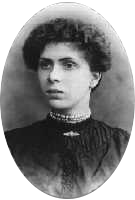
The Death of Camilo Cienfuegos : According to Captain Roberto de Cárdenas
Roberto de Cárdenas is a veteran of Column 14, part of the forces that were insurgents against the Batista tyranny in Cuba. He is 41 years old and was a pilot with the Cubana Aviation Company, in which capacity he crossed the Atlantic two hundred and fifty times. He was a friend of the late Camilo Cienfuegos whom he helped in his revolutionary activities. He received his military training at the Louisiana Academy; after retiring from aviation, he turned to farming. Roberto de Cárdenas’s hacienda was used as a base in the actions that led to the overthrow of the Batista tyranny. Through those actions, Cárdenas stuck up a close friendship with the guerrilla who was to vanish, murdered by the leader of the revolution. Cardenas states this in the book that appears under the title Yo acuso a Fidel. By way of a foretaste, we offer our readers one of the chapters designed to stir American opinion.
HOW I CAME TO KNOW CAMILO CIENFUEGOS
Camilo came down from the sierra and settled on my rice farm in Oriente province, located between the towns of Manzanillo, Tirnas, Bayamo and Holguín. After a conversation with Camilo, arrangements were made for it to be used as his headquarters.
That is where Column 14 was raised. I wanted to stay on there but was put in charge of the Column’s intelligence section and had to head back to Havana. A short-wave wireless station and radio communications system were set up on the farm, thus turning it into a communication centre. From the farm, lines of underground wire reached out to certain nearby points and workshops were set up to produce a range of weapons.
The first battle on the plains, the battle of “La Estrella”, took place there.
On one of my visits to Camilo’s headquarters, at a time when I was a member of the Rebel Air Force, we found out that comandante Félix Torres, a leading communist who was in charge in Las Villas province, was proving irksome due to his Stalinist methods. Camilo took this very much to heart …
THE MATOS AFFAIR
Once Huber Matos, a colleague of Fidel Castro’s, had made up his mind to step down and we had a rough idea of what was in store for him. At 7.00 a.m. on 21 October 1959, Camilo arrived in Camagüey with four lorryloads of his best troops. We had a brief conversation. His main concern was how Huber Matos would weather the incident. He told me:
“I’ve had it with Fidel and the whole 26 July. [Movement]”
Camilo went to see Huber Matos at his home and the first thing Matos said to him was that it was madness for him to have come there when he was next on Fidel’s hit list. Camilo replied that it was the only way he had of saving Huber’s life, because, had Fidel come, his first act would have been to have the mob drag Matos away.
When Huber Matos was taken to Havana as a prisoner, Camilo called me straight away and asked me for a list of my men, as well as of whatever items I needed most. He told me that he would see to it. Camilo spent a couple of days in Camagüey sorting things out and left Captain Mendel Sierra in command of the Army in the city. He left Camagüey on Friday 23 October, telling me that he would be back the next day or the day after that. Camilo did not show up again until Sunday 25 October. He immediately sent for me and we had a long talk with other officers whose names I cannot disclose now. I handed him an itemized list of the items we needed most, weapons especially. He set off again on Monday 26 October, stating that he would be back the next day.
On that second visit he spent the entire afternoon with me and after chatting and joshing with the men we headed for the airfield where there was a Cessna 310, licence, No. 53 standing by. I asked for a weather forecast for the trip, as well as for the Havana base at the estimated time of his arrival in the city. The weather forecast was not good and I was against Camilo’s making the trip in his little plane. I told him I’d rather he flew by a Cubana Company plane, to which he replied that he would, if he could take ten of his best men along. I told him I’d check but I could not book so many people on to the Cubana flight which was pretty full. He response to that was that he would not fly on his own as he was sure that there was a plan to abduct him. This came as a huge surprise to me and I asked him what made him think that. He replied that he knew it and that was that.
That was the last time I saw Camilo.
CAMILO’S DISAPEARANCE
I should say again that Camilo set off on a second trip on Monday 26 October, telling me that he would be back the following day, Tuesday 27 October, for a chat with me once the weapons had been handed back to me …
We headed straight back to the base and that afternoon we received a telegram from headquarters in Havana signed by Captain Verdaguer informing us that Camilo’s plane was having problems with it starboard engine and that he would not be back any earlier that the following day, Wednesday 28 October.
I waited around the next day, but by then things were not looking to good to me. I was on edge …
I waited in the offices at the base and that was where I found out that his plane had taken off from Santiago de Cuba at four o-‘clock in the afternoon, landed in Camagüey and then flown on, bound for Havana, with Camilo on board of course, that same afternoon at 6.01 p.m. All of which intrigued me. Why had Camilo arrived yet not contacted me? There was something fishy about the whole thing. After 8.00 p.m., pretty much the time he would have reached Havana, I started sending official cables asking to be briefed on the time of his plane’s arrival in the city. It was around about midnight when Captain Verdaguer finally replied to me: “That is no concern of yours. Stop with the questions, please.”
That response made my mind up and I immediately launched inquiries. I discovered that nobody at the airport had seen Camilo on board the plane. I spoke with the mechanics and all the ground staff. There was every indication that his light aircraft had very mysteriously taken off again in a hurry and nobody had laid eyes on Camilo.
In actual fact, what happened was that Camilo had been killed by Fidel himself at the Presidential Palace, at about 9.30 p.m. on the evening of 27 October, the day of the rally lobbying for Huber Matos to be executed.
Pepito Rieras was present at the Palace at the time of the rally, when the crowd was being whipped up by him to insist that Huber Matos be shot. Fidel, Raúl and Almeida addressed that crowd. Camilo refused to speak that night. He then upbraided Raúl for having egged on the masses to demand that Matos be shot when he was not guilty of any offence. Raúl’s reaction was to fly into a rage, spitting abuse and Camilo told him, also angrily, that he was going to kill him where he stood if he kept it up.
There is another witness, whose name cannot as yet be revealed and who was present for the aftermath of the argument… According to that account, voices were being raised in tone up until the point where, out of the blue, a gunshot rang out, followed by another. That witness heard Raúl shout:
“You’ve killed him!”
These incidents occurred in a room at the Presidential Palace where they were gathered. We subsequently discovered that, that night, Fidel needed to be attended by a doctor after suffering a nervous breakdown.
Original appeared in Reconstruir (Buenos Aires)
From La Révolution prolétarienne (Paris) May 1962
Translated by: Paul Sharkey.
Subjects:
Similar items
- Revolution and the State: Anarchism and the Spanish Civil War 1936-1939 by Danny Evans [Review].
- Pinós, Daniel. Reinaldo Boris Santa Coloma, Trade Union Activist, Anarchist and Member of the Resistance to the Fulgencio Batista Dictatorship.
- Dias, Quezia and Milton Lopes. Anarchism and the military dictatorship in Rio de Janeiro: Milton Lopes's recollections.
- Guillamón, Agustín. Distinguishing Between Defence Groups, Affinity Groups and Action Groups.
- Amores, Macarena. Amapola Peiró, grand-daughter of Joan Peiró.