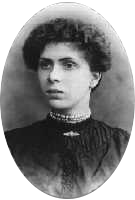
Saturnino Martínez, the Man Who Roused Cuban Workers from Their Slumbers
The earliest proletarian leader in Cuba was no socialist, nor was he a native-born Cuban. He was Saturnino Martínez, a native of Asturias and on arrival in Cuba he was a supporter of the Spanish Empire and a member of the “Volunteer Corps”.[1] Even so, the Cuban working class is deeply indebted to him.
Saturnino moved away to Cuba when he was very young and he tried his hand at several trades, including cigar-maker. Although a conservative on the issue of Cuban separation from Spain, this native of Asturias was influenced by the liberal mind-set of progressive Cuban personalities such as Nicolás de Azcárate, the principal of the Guanacaboa High School and a member of the illustrious ‘Friends of the Country’ Economic Society.
It was in the Society’s library – where he put in some time as a librarian once his day’s manual labour was done – that Saturnino was “contaminated” by notions of progress and enlightenment championed by the most forward-looking segments of the criollo (home-grown) bourgeoisie.
As in Europe, where the gains of liberalism provided protection against intolerance and allowed for the emergence of socialist trends, that same enlightened spirit allowed Saturnino Martínez to prepare the ground that would later – through the establishment of newspapers, libraries and workers’ associations – harbour the most radical doctrines operating on behalf of workers.
Martínez opened the doors of workers’ social awareness – not always intentionally – to movements that were out to better workers’ conditions either through political reforms or by means of anti-State revolution. Striving to uplift the workers’ educational levels, he unwittingly opened a veritable “Pandora’s box” in a society racked by pro-independence plots.
Saturnino Martínez was a fore-runner when it came to exposing the dire living conditions endured by a Cuban proletariat that emerged during colonial rule. Yet he always did so from a conservative vantage-point, appealing to Christian ethical values and taking care lest his criticisms be conflated with those emanating from opponents of colonial rule.
His activity took off in 1865. At his instigation, reading sessions were introduced into tobacco factories and the newspaper La Aurora (the very first workers’ newspaper in the history of Cuba) was launched. Halfway through that year he also launched the Havana Tobacco Manufacturers’ Association.
A ‘dangerous’ visitor to the island: Anarchist ideas
It can be argued that anarchist thinking spread increasingly and discreetly to Cuba, beginning with propaganda in favour of cooperatives. The leading channel for this spread – today’s powers-that-be might refer to it as a “transmission channel” – was the weekly La Aurora under Saturnino’s direction. It served to popularize the ideas of the French thinker Pierre-Joseph Proudhon who became a very familiar figure to the more politicized members of the earliest printing workers’, day labourers’ and artisans’ associations.
Anarchists to the fore in the workers’ movement
In Cuba the 1880s were marked by considerable anarchist unrest. The arrival of fresh waves of migrants from the Spanish mainland entailed an accelerated spread of socialist ideas through the Cuban workforce.
It ought to be stressed that at that time the most widespread notion of “socialism” in Spain could be traced to the anarchist principles of Mikhail Bakunin. Karl Marx was deeply disgruntled by this and he put his son-in-law, Paul Lafargue (a Cuban-born of mixed race parentage, which further underlined his criollo character) in charge of combatting the influence of the thinking of his old Russian rival from within the First International.
Even though Cubans could look to a family member of Marx’s, a quirk of history saw to it that the thinking of State socialism was not the initially dominant factor among Cuban workmen. The workers of that time, perhaps guided by a more sure-footed instinct than that of their 20th century descendants, embraced the principle of a libertarian socialism instead, as spelled out at the Second Regional Congress of the Federation of the Spanish Regional Workers held in Seville on 24 September 1882. At which point brand-new workers’ publications surfaced in Cuba. Of these, El Obrero, launched in 1885 by the printing worker Eduardo Pineda and which, over time, became the mouthpiece of the Havana Workers’ Circle, had unmistakably anarchist leanings.
The Circle had been launched that same year, on 6 February. Its founders included several well-known anarcho-syndicalist leaders from a range of trades, notably Enrique Messonier and Enrique Crecci. Both men were also to have a hand in 1887 in the establishment of the first local tobacco-workers’ federation among the Cuban workers living in Tampa and Key West (Florida, USA).
The Havana Workers’ Circle was designed to deliver secular education for workers, set up libraries and draw producers away from conventional politics and to eradicate all discrimination based on race, nationality or social hierarchy.
The propaganda activities driven by the Circle encouraged the establishment of lots of anarchist groups in different parts of the island, especially in Havana and in the central region.
Another important factor in the spread of anarchism was the Spanish newspaper La Tramontana. Copies of it arrived in Havana in sizeable numbers for onward distribution to a range of locations such as Santiago de la Vegas, San Antonio de los Baños and Batabanó.
And it was not just papers loaded with anarchist ideas that were arriving: sometimes particularly combative militants were coming ashore too. One example was the Catalan Valero Bardejí: on the run from the police, he reached Havana in 1884. After establishing contacts with his countryman Enrique Messonier, he raised “direct action” anarchist groups – some of these had up to nineteen members – and he was a real thorn in the side of the colonial authorities.
Cuban anarchism’s most prestigious figure emerged in late 1886: this was Enrique Roig San Martín.
Born in Havana in 1843 to a Cuban father who lectured in surgery and a Mexican mother, he became a tobacco worker in 1880. Initially drawn to notions of autonomy for Cuba, in 1882 he discovered anarchist teachings and went on to become one of their most fervent champions for the rest of his life.
Roig San Martín became editor-in-chief of the Boletín del Gremio de Obreros, the mouthpiece of the tobacco workers that had been launched by Saturnino Martínez. He later went on to launch the most pugnacious of Havana workers’ papers, El Productor (1887).
That instrument of labour agitation stayed under his editorship up until his death on 29 August 1889. His funeral bore witness to his popularity and the respect he commanded not just in the ranks of working men but also among a broad swathe of society which regarded him as an incorruptible idealist.
His untimely death robbed the anarchist movement of one of its “three Enriques” – Roig, Messonier and Crecci. Despite the loss, the activities of libertarian socialists continued to make headway in the Cuban colony.
The campaign waged by El Productor on behalf of workers was so significant that in 1888 the Havana Central Workers’ Board made it their official mouthpiece.
Its column bluntly peddled the basic principles of anarcho-syndicalism: a shunning of political activity, repudiation of nationalism and utter rejection of the State, etc.
Its influence helped for a time to draw the workers away from both the pro-independence policy championed by José Marti and the notions of authoritarian socialism inspired by Marx back in Europe.
However, there was more to El Productor than just a propaganda vessel. Thanks to the anarchist Alianza organization, the paper played an active part in a number of strikes, notably the first successful strike in the tobacco sector in December 1887.
Hostile to any notion of nationality, El Productor did however promote robust international labour solidarity. Every year it commemorated the Paris Commune as a date of symbolic significance for workers the world over and it embarked upon a broad protest campaign at the death sentences passed in the United States on the anarchists implicated in the Haymarket Affair in Chicago.
On 2 October 1887, the Cuban anarchists established an Aid Committee designed to support those eight condemned men. Among its many initiatives was the organization of a huge rally at the Jané Circus on 8 November to press the governor of Illinois for clemency on their behalf.
Upwards of two thousand workers took part in that and they were drawn from many trades: lithographers, tobacco workers, mechanics, bakers, shoemakers, tailors, cigar-makers, laundry workers and lots of others.
Marking May Day: Cuba one of the first countries in Europe and the Americas to do so
Few people realize that it was thanks to the drive of the Cuban anarchists that Cuba was one of the few countries to mark – from 1890 onwards – May Day as international workers’ day, for the first time in history.
That worldwide initiative had been decided at the congress held in Paris in July 1889 that gave birth to the Second International (the Cuban Paul Lafargue was one participant). There, delegates called for a mass international demonstration in the course of which the workers pressed the authorities to reduce working hours to eight hours per day.
Even though this initiative emanated mainly from European social democratic organizations, the Havana Workers’ Circle, with its anarchist leanings, made it its business to orchestrate the commemoration in Cuba as well.
There was nothing surprising in that: Cuban anarchists also saw that date as an opportunity to honour the memory of the anarchist activists in Chicago, on whose behalf they had mounted such an intense solidarity campaign.
On 20 April, the Workers’ Circle issued a call for a peaceable public demonstration designed to show the ruling classes, the government and society as a whole what the aspirations of Cuban labour amounted to.
Around 3,000 workers took part in the procession. The parade set off from the old Campo de Marte (the Brotherhood Park these days), passing through Reina, Galiano, San Rafael and Consulado streets before ending at the Skating Rink, a building located at the junction of Virtudes and Consulado streets. Something like fifty speakers addressed the crowds.
They complained of:
• Cuban workers’ impoverished and exploited circumstances
• Over-long working hours
• Racial discrimination
• Social inequality
They called for
• The eight-hour day
• Equality between White and Black
• A radical change in the established social order
• The pursuit of worldwide human brotherhood
We should stress the contrast between the freedom of expression accessible back them in colonial Cuba and the freedom that is alleged to obtain in contemporary Cuba. In accordance with such freedom, the trade unionists back in those days were able freely to express their ideas as long as they steered clear of armed activities.
In 1890, the Spanish colonial government again granted permission for a workers’ gathering, but insisted that it should be held in an enclosed space – the Irijoa Theatre (the Martí Theatre today).
At that meeting, several resolutions were passed, one being that a new regional workers’ congress was to be held and the preparations for it were entrusted to the Workers’ Circle. However, not all anarchist activity was carried out within the parameters of the laws.
At around that time, eleven libertarian activists faced trial for a knife attack on a reformist worker suspected of having links to the police. Even though they were acquitted, the incident was used as a pretext for a fresh wave of repression targeting the anarchist movement. That crackdown entailed, notably, a temporary suspension of El Productor, which was not able to resurface until 1892.
The spark ignites
The regional workers’ congress for the island of Cuba met from 15 to 19 January 1892.
The use of the term “regional” was down to the fact that the Cuban labour movement was still deemed a component part of the Spanish labour movement.
The congress met on the premises of the Galician Centre in Havana, located at the intersection of Prado street and Dragones street.
Seventy-four delegates took part.
The proceedings – free of party political oversight – freely explored the chief concerns of working people:
• The eight-hour day
• The right to strike
• Forms of labour organization
• Racial equality
• The status of women
• Child labour
One of the most outstanding aspects if the congress was a debate that pitted two schools of thought against each other:
1. Workers in favour of Cuban independence.
2. More orthodox, cosmopolitan or anti-militarist anarchists who preferred to remain neutral on the national question.
The latter stance was clear in the words spoken by delegate Eduardo González:
“As for me, I being an enemy of the integrist as well as of the independence supporter, I will shake hands with them both when it comes to standing up to the bourgeois.”
At the end of the proceeding, a majority felt that Cuban anarcho-syndicalism should ease up on its traditional hostility to nationalism and support the Cuban people’s emancipationist aspirations.
A resolution to that effect was carried.
On the one hand, the congress asserted that workers could only free themselves by embracing the principles of revolutionary socialism.
However, it also argued that the spread of idea through the Cuban workforce ought never to hinder the fight for Cuba’s national liberation.
In essence, those attending the congress were arguing that it would be a nonsense for a man striving for his own freedom to deny collective freedom to a people seeking to shrug off the overlordship of another people.
Prominent among the signatories was Enrique Creci who would later lose his life fighting in the ranks of the army fighting for an independent Cuba, and Enrique Messonier, the sole survivor of Cuban anarchism’s renowned “three Enriques”.
The response from the provincial governor Francisco Cassá was immediate.
He ordered that the signatories to the resolution be arrested and the congress shut down.
In an official document dated 20 January 1892, he excused his actions by asserting that the resolutions passed were designed to introduce the methods of “revolutionary socialism” and amounted to a threat to the established social and political order.
In spite of this, the Cuban liberal newspaper La Discusión spoke up to defend those at the congress, stressing that similar resolutions had already been passed in a number of European countries, including Spain, without their triggering any court prosecutions.
Following the break-up of the congress, the authorities launched a fresh round of repression:
• Shutting down anarchist newspapers
• Rounding up the main leaders
• Expelling and deporting people
Setting aside La Discusión’s well-meaning defence of the anarchists, it has to be conceded that, in the motion cited above, the congress was stepping outside of the boundaries of the “political game” that the colonial authorities were prepared to countenance in the island. Therein lay the particular significance of the event. It was at that point that the dichotomy between the labour movement and the movement for independence publicly broke down.
The Spanish administration in Cuba was unable to prevent the alliance – as an attempt was made at the congress to build – between anarchist rebels and the supporters of José Martí’s revolutionary liberalism. The libertarians’ championship of their social demands was forgivable, whereas championing independence during a period of “productive truce” was a step too far.
At that point in Cuban history, one phase of the evolution of labour leadership in Cuba came to a close. That phase had been ushered in through the activity of Saturnino Martínez, the liberal-minded Asturian who favoured the connection with Spain, and it ended with a congress that built a bridge between anarchism and support for Cuban independence, in the midst of debates raging around hugely conflictive social issues.
That “concession”, made by Cuban anarchists on the brink of a brand-new and final stage of separatism represents evidence both of their flexibility and the particular social-historical circumstances in which the libertarian movement had had to emerge and develop in late 19th century Cuba.
Carlos M Estefanía
Carlos M Estefanía, a Cuban dissident living in Sweden, is editor-in-chief of the on-line review Cuba Nuestra
See https://cubanuestra1.wordpress.com
Note
1, In the mid-19th century, the Captaincy-General raised a Volunteer Corps in Cuba. This was a move that was needed and crucial as part of Cuba’s defensive arrangements, which increasingly provided the raison d’etre of the integrist outlook as a political stance or trend. The term “integrism” here is a translation of the Spanish integrismo and in a Cuban and Spanish historical context, refers to a political school of thought championing Cuba’s remaining an integral part of the wider Spanish Empire. For the purposes of this text, it might be translated also more explicitly as “the lobby supporting Spanish annexation” or “movement supporting the preservation of Spanish sovereignty.”
Translated by: Paul Sharkey.
Subjects:
- Cuba
- History of Anarchism
- Labour/Labor movement
- Lives (biography, autobiography)
- Martínez, Saturnino
- Mayday
- Nationalism
Similar items
- Pinós, Daniel. Reinaldo Boris Santa Coloma, Trade Union Activist, Anarchist and Member of the Resistance to the Fulgencio Batista Dictatorship.
- Pinós, Daniel. Alfredo López, Anarchist Founder of the Cuban Trade Union Movement.
- Ferrer y Guardia, Francisco. Against Bull-Fighting and Human Exploitation.
- Alberola, Octavio. Octavio Alberola interviewed about Cuba.
- Pinós, Daniel. Frank Fernández (1932-2026) Historian of Cuban Anarchism, Libertarian Activist and Exiled Intellectual.