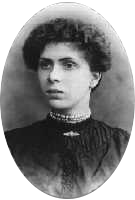
Juan José Caba Pedrazo, Jailbreaker
[…] Today we are going to have a look at the record of Juan José Caba Pedrazo, a name that crops up regularly in my pieces about libertarian forgers. Here I must thank Luis Antonio Ruiz Casero for sending me the reports on the governor of one of the prisons that held our jailbreaker, enabling me to add to what information I already had on him. I really appreciate the network of collaborators we have built up and sharing the memories we conjure up among heaps of people, since we all know one another personally, or maybe just by post. Thanks to one and all for ensuring that the net is being cast ever wider.
Now to brass tacks!
Don’t go thinking that gathering information about this guy has been easy. Nevertheless, let us have a look at what we have found. Juan José Caba Pedrazo was born in Manzanares in Ciudad Real province, sometime around 1920, on 1 February to be specific. Given his age, he should not have been involved in the fighting in the civil war’s early years, albeit that there were plenty who falsified their dates of birth in order to take part. We have no information about Caba at that point, even though he was tried and convicted in 1940 for aiding and abetting “rebellion”, which seems to suggest that he was somehow caught up in it.
From his youth he was active in the CNT. In the 1940s he even served on its National Committee, under general secretary Enrique Marco Nadal. But if his name has come down to us today, it is because Caba was a conscientious and extraordinary jailbreaker. Add to that his skills in the counterfeiting of documents which was a great help to him, not just in his jailbreaks, but also in the escapes made by various comrades of his. So what?
As I have said, the first reference to him that we have run across comes from a list of the summary proceedings mounted between 1940 and 1943 by the XIIth Division. How much time he was at large between 1940 and 1947, I do not know, but what is known is that he was doing the rounds of a number of Francoist prisons. He served some time in the one in Ciudad Real before being moved on to Porlier prison, before ending up in Yeserías prison. That there is where he began to turn into a legendary jailbreaker. He must have grown weary of Franco’s prison hospitality by then because in February 1947 he broke out of Yeserías.
His delight at being at large again was not long-lived as he was arrested in Madrid three months later, when Marco Nadal’s National Committee was rounded up. Initially he was sent to Alcalá de Henares prison, like several other libertarians arrested in 1947, and, a few months later, they were to be transferred to Ocaña penitentiary.
On arrival in Ocaña, Caba, together with José Yáñez, “put their heads together” and started work on an escape plan. Shortly after that it was “all hands to the wheel”, to which end they were able to call upon the assistance and participation of several more libertarians.
During the first quarter of 1948, they planned and excavated a tunnel roughly 13 metres in length. They had to do so without attracting undue attention, disposing of the excavated soil discreetly, whilst, naturally, keeping in touch with the organization outside of the prison walls as the latter would be taking them under its wing once they were back on the streets. The date chosen was 8 May 1948. And the would-be escapers? Jose Yáñez, Germán Horcajada, Juan José Caba himself, Antonio Ejarque, Pedro González Calero, Eusebio Azañedo, Francisco Romero, Luciano Torróntegui, Francisco García, Manuel Rodríguez, Antonio Cerezo and Vicente Espín. Juan García Durán was also to have been in on it, but he was transferred to El Dueso prison a week previously. And the people on the outside? Well, Tomasa Azañedo acted as the liaison between the would-be escapers and the committees on the outside, as did another woman by the name of Araceli, who was also a relative of one of them. The Madrid CNT also supplied a lorry, with a comrade to drive it and safe-houses in the city.
The escape was set in motion, with just one last stretch for the tunnel to breach the surface, but, unexpectedly, something went awry. They had fallen short. And finished up inside rather than beyond the carpentry workshop. There was an emergency meeting to determine whether they should give up or see things through. There was no turning back. They forced a hole in the roof, set up a ladder inside the workshop and jumped over the wall. The lorry was waiting, but there were only 11 of them; one man was missing. They waited for a bit but the hopelessness of the situation prompted them to press on.
The missing man was Francisco García, although he too cleared the wall a little later. When he got out, he found himself on his own. He headed for the nearest railway station and there he bumped into a railway worker and asked about the time of the next train. The railway worker, smelling a rat, pointed him to a place where he could stay out of sight and soothed him with a few words that were as sweet as honey: “You stay there. I’ll get you as far as Madrid.”
The break-out may have gone well but shortly after that it all went to pot. Let me say that only Antonio Ejarque and Francisco Romero made it out to France. On 13 May, Juan José Caba, Luciano Torróntegui and González Calero were detained in Madrid. On 16 May, the Civil Guard stopped the vehicle carrying the other seven out to France. By 20 May they were all back inside Ocaña.
Our jailbreaker’s next posting was to San Miguel de los Reyes prison, He served quite a bit of time there, bringing us up to 1952. The idea was the same as ever: getting out as soon as possible. This time they would adopt a different approach. Once again a plot was worked out with another two libertarians – Joaquín Pueyo Moreno and Francisco Canas Becerra. It all started when Pueyo was assigned to the prison administration office, where he started handling papers, including witness statements and pardon certificates. Pueyo was also aware of Caba’s manual skills, having seen him replicate and copy other documents. So a few of the relevant documents were obtained and passed on to Juan José. He bought paper and ink from the prison commissary and set about forging the prison’s headed notepaper. And, using a knife and an eraser, he replicated the pertinent seals from the Madrid courts, those being the ones within whose jurisdiction any pardon requests for him would fall. What they now needed was a type-writer in order to fill out Caba’s forged documents. They were reluctant to use the one from the admin office, just to be sure that there was no misalignment, so our forger pencilled in the wording that needed to be typed in elsewhere.
Which is where step three came in. Francisco Cañas contacted his brother Fulgencio who was to obtain a double-sided receipt and he was to be the person trusted with getting the documents out on to the streets. Along with Francisco Jiménez and Sebastián Márquez, Fulgencio hired a type-writer and typed up the texts. The various documents were then posted off, separately, from Madrid, displaying the headed stationery of the Palace of Communications in Madrid and addressed to San Miguel de los Reyes prison in Valencia. Within days, all three of them were back on the streets, to the great surprise and quiet satisfaction of many an inmate of the prison.
The final part of the plan entailed getting out of the country. Pueyo and Cañas chose the western Pyrenean route, whereas Caba and another two comrades would try the Catalan Pyrenees. Near Elizondo, the Civil Guard stumbled upon the first group and captured them. The group that had opted for the Catalan route was also intercepted by the Civil Guard in Torelló; shots were exchanged, claiming the life of one of Caba’s companions. Caba, however, reached and crossed over the border that he was so eager to see.
Pueyo and Cañas, already serving 30-year sentences, received another 8 years for attempting to escape. Fulgencio Cañas received a 7-year prison term and 6 months in custody. Márquez received a 3-year prison sentence plus 6 months in custody.
Settling in France, Caba remained active in the libertarian movement and was called upon occasionally on account of his ‘artistic’ talents.
Juan José Caba Pedrazo died in Amboise General Hospital (Indre-et-Loire department, France) on 19 January 1970.
El Salto, 29 March 2026 https://www.elsaltodiario.com/ni-cautivos-ni-desarmados/juan-jose-caba-pedrazo-fuguista-falsificador
[Image source: Imanol]
Translated by: Paul Sharkey.
Subjects:
- Caba Pedrazo, Juan José
- Confederación Nacional del Trabajo CNT
- France
- History of Anarchism
- Lives (biography, autobiography)
- Prison
- Repression
- Spain
- Spanish anarchists outside Spain
Similar items
- Imanol, -. Unknown and Essential. Forgers and the Libertarian Underground.
- Imanol, -. The UJA, One of the Very First Groups to Fight Francoism.
- Imanol, -. The Baix Llobregat [Lower Llobregat] Gang, its big sabotage operation and other minor affairs from the time.
- Carballeira Mombrió, Ángel and Agustín Guillamón. The Affinity Group That Published the Underground Anarchist Paper, Alerta!.
- Imanol, -. Robbing the Belgian Royal Family. Proceeds? Somewhere between 400 and 800 MILLION francs.